Top 10 Mobile App Development Companies in 2026: How to Pick the Right Build Partner
Key Takeaways
The top mobile app development companies in 2026 include AFIC Technest, Netguru, Appinventiv, WillowTree, Simform, Miquido, Code Brew Labs, Intellectsoft, Blue Label Labs and Tapptitude. The right choice depends on three things: your platform strategy, your budget band, and whether your industry carries compliance weight.
What Is Mobile App Development?
Mobile app development is the process of designing, building, testing and releasing software that runs on smartphones and tablets, usually distributed through the Apple App Store and Google Play. It covers everything from the interface a customer taps to the servers, databases and APIs working quietly behind it.
Most people picture the visible part. In practice, a serious build is roughly 30 percent interface work and 70 percent architecture, integration and infrastructure. That imbalance is exactly why the cheapest quote so often becomes the most expensive project.
Native, Cross Platform, Hybrid or PWA
Approach | Built with | Best for | Relative cost | Time to market |
Native | Swift and SwiftUI for iOS, Kotlin and Jetpack Compose for Android | Camera, AR, heavy graphics, offline first apps | Highest, two codebases | Slowest |
Cross platform | Flutter, React Native | Most business apps, marketplaces, booking, fintech front ends | Moderate, one codebase | Fast |
Hybrid | Ionic, Capacitor | Content driven apps, internal tools | Low | Fastest |
Progressive web app | Standard web stack | Reach without an app store listing | Lowest | Fastest |
A useful rule: if your app's core value depends on a device capability, go native. If it depends on data, transactions or content, cross platform will serve you better and cost noticeably less.
The Six Stages of an App Build
Discovery. Requirements, user research, competitor teardown, technical feasibility.
UX and UI design. Wireframes, then a clickable prototype, then the visual system.
Architecture. Data model, API design, security model, third party integrations.
Development. Sprint based delivery with a working build at the end of each sprint.
Testing. Functional, device matrix, performance, security and user acceptance testing.
Release and iterate. Store submission, monitoring, then improvements driven by real usage.
Any agency that wants to skip straight from a phone call to stage four is telling you something important about how they work.
How Much Does Mobile App Development Cost in 2026?
Broadly, in the current market:
Simple app, single platform, few screens, no complex backend: 15,000 to 40,000 USD
Mid complexity app, user accounts, payments, admin panel, both platforms: 40,000 to 120,000 USD
Complex or enterprise app, real time features, legacy integration, regulated data: 120,000 USD and upward
What actually moves that number is rarely screen count. It is integrations with systems you do not control, compliance requirements, and how many times the scope changes after design is signed off.
Want the full breakdown by feature? Read our companion guide on what custom software development really costs at enterprise scale.
How We Evaluated These Companies
We screened more than 70 firms that publicly market mobile app development, then scored the shortlist against seven criteria: verified client reviews on Clutch and G2, live apps we could download and test ourselves, technical depth across native and cross platform stacks, industry specialisation, transparency of pricing and process, communication and time zone practicality, and post launch support offering.
We removed any company whose portfolio apps were no longer live on either store, and any firm whose reviews clustered suspiciously within a short window.
Full disclosure: AFIC Technest is our own company and appears on this list. We have written our entry the same way we wrote the others, including the limitations. Judge us on the same criteria you apply to everyone else here.
Top 10 Mobile App Development Companies in 2026
Company | Headquarters | Best for | Core stack |
AFIC Technest | Jeddah, Saudi Arabia | GCC market entry, growth focused builds | Flutter, React Native, Node.js, Next.js |
Netguru | Poznan, Poland | Design led product builds for scaleups | React Native, Swift, Kotlin |
Appinventiv | Noida, India | Volume delivery at competitive rates | Flutter, React Native, native |
WillowTree | Charlottesville, USA | Enterprise and Fortune 500 programmes | Native iOS and Android |
Simform | Orlando, USA and India | Cloud heavy and AI enabled apps | React Native, AWS, Azure |
Miquido | Krakow, Poland | AI and machine learning features | Flutter, Kotlin, Python |
Code Brew Labs | Dubai, UAE | On demand and marketplace apps | Flutter, Node.js |
Intellectsoft | Palo Alto, USA | Construction, insurance, fintech | Native, .NET, blockchain |
Blue Label Labs | New York, USA | Startup MVPs with strong product thinking | React Native, Swift |
Tapptitude | Cluj, Romania | Lean teams shipping consumer apps | Flutter, React Native |
1. AFIC Technest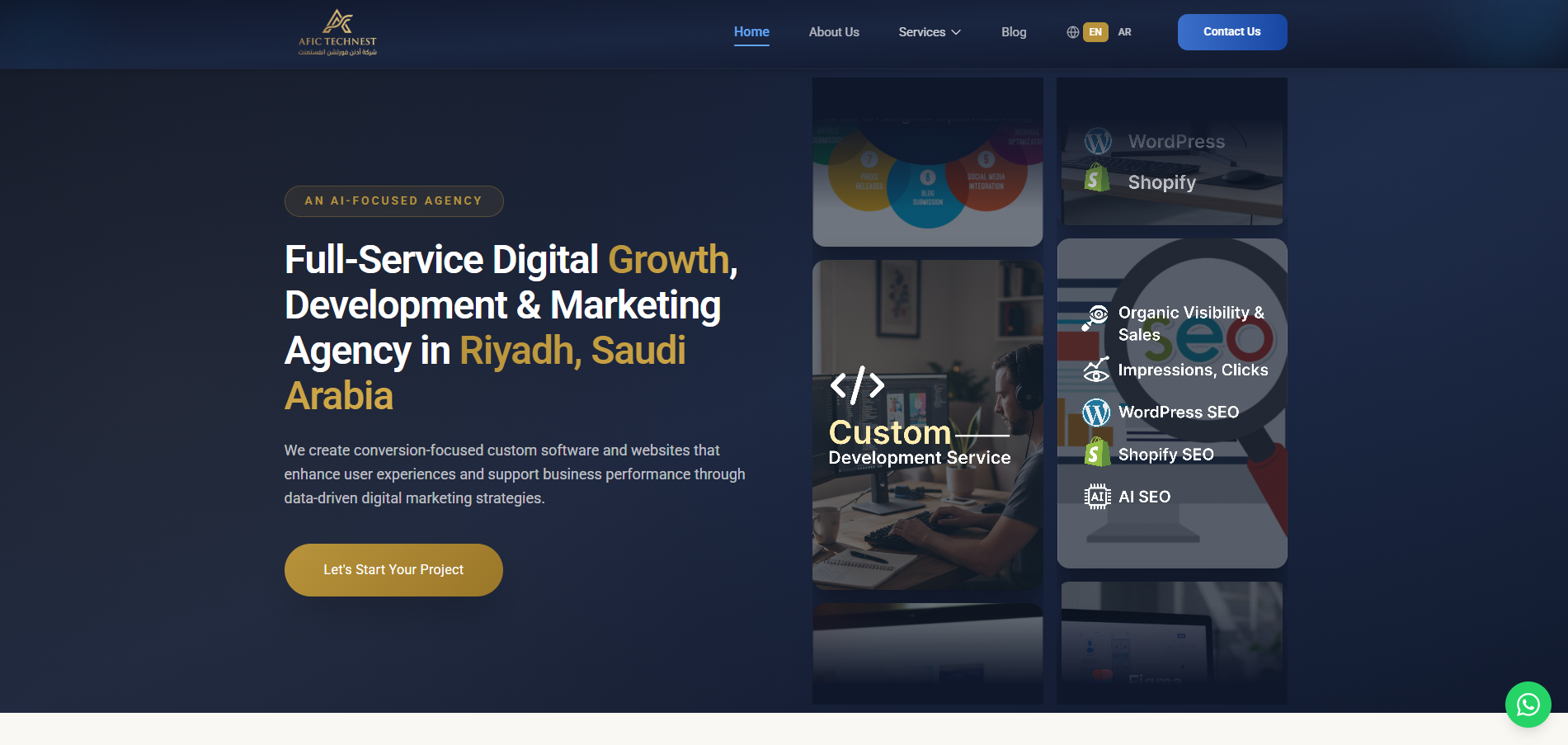
A full service digital growth, development and marketing agency headquartered in Jeddah, serving Saudi Arabia, the UAE, Qatar and Bahrain alongside clients in the United States and the United Kingdom.
Best for: businesses that want the app and the growth engine around it built by the same team.
Most agencies hand you a finished app and wave goodbye. Our delivery model treats launch as the midpoint, not the finish line, because an app with no acquisition strategy is an expensive brochure. The same team that ships your build also runs the SEO, app store optimisation and campaign work that brings users to it.
Strengths
Genuine regional knowledge, including Arabic and English interfaces, right to left layouts, local payment gateways and SAMA and PDPL considerations
Design and engineering under one roof, with UI and UX handled before a line of production code is written
Proven delivery across education, eCommerce, healthcare, real estate and SaaS, documented in our case studies
Consider if: we are an emerging agency rather than a thousand person firm. If your procurement process requires a vendor with two decades of history, we will not clear that filter, and we would rather say so upfront.
Explore our mobile app development services.
2. Netguru
A Polish firm with a long reputation for design led product work, frequently chosen by funded scaleups in fintech and mobility.
Strengths: strong product discovery practice, mature process documentation, comfortable European time zone overlap for UK and Middle East clients.
Consider if: Rates sit at the higher end of the European market, and smaller projects can struggle to get senior attention.
3. Appinventiv
One of India's larger app development firms, with a broad portfolio spanning consumer apps, enterprise tools and government projects.
Strengths: deep bench across every major stack, competitive pricing, ability to staff a large team quickly.
Consider if: Scale brings variability. Delivery quality tends to track the specific team assigned, so ask to meet the actual engineers before signing.
4. WillowTree
A US firm now part of TELUS Digital, known for long running enterprise engagements with major consumer brands.
Strengths: exceptional native craftsmanship, rigorous accessibility and QA practice, strong governance for regulated clients.
Consider if: the pricing model suits enterprise budgets. Early stage companies will find better value elsewhere.
5. Simform
A distributed engineering partner with meaningful strength in cloud architecture and AI enabled features.
Strengths: solid backend and DevOps capability, good fit when the app is the front end of a bigger platform.
Consider if: design is not the strongest part of the offering. Many clients pair Simform with a separate design partner.
6. Miquido
A Krakow-based studio with a real specialism in machine learning features inside consumer apps.
Strengths: genuine AI and data science capability rather than marketing language, strong Flutter practice.
Consider if: the team is deliberately mid sized, so availability for large parallel programmes can be limited.
7. Code Brew Labs
A Dubai headquartered firm that has built a niche around on demand, delivery and marketplace applications across the GCC.
Strengths: regional presence, fast turnaround on marketplace style products, familiarity with local logistics and payment ecosystems.
Consider if: the portfolio leans heavily toward one product pattern. Highly bespoke or unusual products may be a weaker fit.
8. Intellectsoft
A US registered firm with delivery centres in Eastern Europe, focused on construction, insurance and financial services.
Strengths: strong enterprise integration experience, comfortable working alongside legacy systems.
Consider if: engagements tend to be longer and more formal, which suits established companies more than fast moving startups.
9. Blue Label Labs
A New York studio built around startup product work, with a strong emphasis on validating the idea before building it.
Strengths: excellent product strategy, honest guidance on scope, good record of getting MVPs to market.
Consider if: US rates apply, and the team is not designed for large enterprise programmes.
10. Tapptitude
A Romanian studio that ships consumer facing apps with small, senior teams.
Strengths: high design quality, direct access to senior engineers, efficient European pricing.
Consider if: capacity is limited, so lead times can stretch during busy periods.
Best Mobile App Development Companies by Category
Best for startups and MVPs: Blue Label Labs, Tapptitude and AFIC Technest. What matters at this stage is a partner willing to cut scope rather than cash your cheque for features nobody has validated yet.
Best for enterprise: WillowTree and Intellectsoft. Look for governance, security review processes and experience integrating with systems that predate the smartphone.
Best for eCommerce and marketplaces: Code Brew Labs, Appinventiv and AFIC Technest. Payment orchestration, inventory sync and search performance decide whether these apps succeed.
Best for healthcare and fintech: Intellectsoft and Simform for compliance heavy builds. Ask directly about HIPAA, PCI DSS, GDPR and, in the Gulf, SAMA and PDPL alignment.
Best in Saudi Arabia and the GCC: AFIC Technest and Code Brew Labs. Regional builds carry requirements that offshore teams routinely underestimate, from Arabic typography and right to left layouts to Mada and STC Pay integration and data residency rules.
How to Choose a Mobile App Development Company
Twelve Questions to Ask Before You Sign
Who exactly will work on this, and can I meet them?
What does your discovery phase include, and is it billed separately?
Can I download three apps you built and still support?
How do you handle scope changes mid project?
Which parts, if any, do you subcontract?
Who owns the source code, the design files and the store accounts?
What is your testing process, and which devices do you test on?
How do you handle security review and penetration testing?
What happens in week one after launch if something breaks?
What does ongoing maintenance cost annually?
Will you help with app store optimisation and launch marketing?
What is your average client relationship length?
Question six matters more than most founders realise. If the answer is vague, walk away.
Red Flags
A fixed price quote given before any discovery work
A portfolio full of apps no longer available on either store
Reviews that all appeared within the same two month window
No named project manager or single point of contact
Reluctance to put IP ownership in writing
A quote dramatically below every other bid you received
Fixed Price, Time and Materials, or Dedicated Team
Fixed price works only when requirements are genuinely locked, which for a first app they almost never are. Time and materials suits evolving scope but requires trust and disciplined reporting. A dedicated team model makes sense once you have a roadmap running beyond six months. Most successful builds we have seen use a fixed price discovery phase followed by time and materials delivery.
What Happens After Launch
Your app will need work in its first year regardless of how well it was built. Apple and Google ship OS updates that break things. Libraries reach end of life. Analytics reveal that the flow you were certain about confuses half your users.
Plan for a maintenance retainer covering OS compatibility updates, bug fixes, security patches, crash monitoring and small feature improvements. Budget 15 to 20 percent of the build cost annually.
Then there is the harder question: how will anyone find the app? App store optimisation, a content strategy on your website and paid acquisition all need to be in motion before launch day, not after. This is precisely why we keep SEO and social media marketing in the same building as engineering.
Choosing Your Partner
Shortlist three companies whose portfolios include work genuinely similar to yours. Run each through the twelve questions above and pay closest attention to how they handle discovery and IP ownership. Then pick the team you would be comfortable talking to twice a week for six months, because you will be.
If you are building for Saudi Arabia or the wider Gulf and want a partner who handles the build and the growth that follows it, talk to our team. The first scoping conversation is free, and you will leave it with a realistic budget range whether or not you work with us.
Still weighing broader options? Our guide to the top custom software development companies covers partners for platform and enterprise work beyond mobile.
Frequently Asked Questions
What is the average cost to build a mobile app in 2026?
Between 40,000 and 120,000 USD for a mid complexity app on both platforms. Simple apps start around 15,000 USD and enterprise builds regularly exceed 200,000 USD. Integrations and compliance requirements drive cost far more than screen count.
How long does mobile app development take?
A straightforward app takes 8 to 12 weeks. A mid complexity app takes 4 to 6 months from discovery to store approval. Enterprise programmes typically run 9 months or longer, often released in phases.
Should I build native or cross platform?
Choose native when your app depends on device hardware such as advanced camera work, AR or heavy graphics. Choose cross platform for content, commerce, booking and most business applications, where you will save roughly 30 to 40 percent.
How is an agency different from hiring a freelancer?
A freelancer gives you one skill set and one point of failure. An agency gives you design, engineering, QA, project management and continuity if someone leaves. Freelancers suit small, well defined pieces of work; agencies suit products.
How do I verify a portfolio is genuine?
Download the apps yourself. Check the developer account name on the store listing, read recent reviews, and confirm the last update date. Then ask for a client reference you can actually speak to.
Do I own the source code?
You should. Insist on full IP transfer on final payment, covering source code, design files, documentation and store account access. Get it in the contract before work begins.
Flutter or React Native for an MVP?
Flutter gives more consistent rendering across devices and better performance for animation heavy interfaces. React Native is easier to staff and integrates smoothly with an existing JavaScript codebase. Both are solid choices in 2026.
What does app maintenance cost per year?
Expect 15 to 20 percent of the original build cost annually, covering OS updates, security patches, bug fixes and minor improvements.
Let's Connect
Have a project in mind? Send us a message and we'll get back to you shortly.
Your information is secure and will never be shared with third parties.
Related Articles
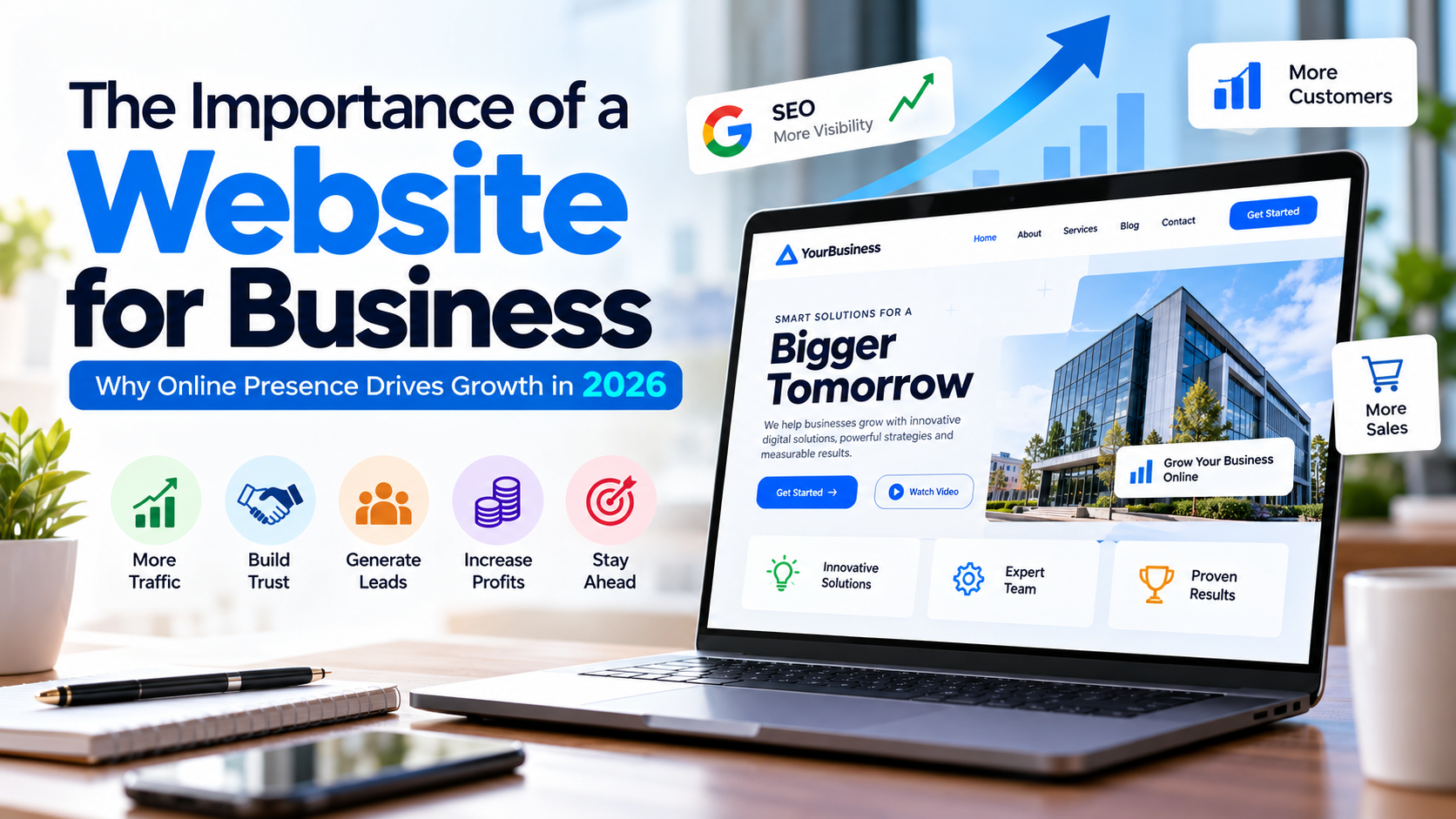
The Importance of a Website for Business: Why Online Presence Drives Growth in 2026
Discover why websites are critical for business success. Learn 7 key benefits, how websites increase profit, step-by-step build strategy, and FAQs from digital experts.
Social Media Marketing Strategy in Saudi Arabia: 10 Trends Shaping Businesses in 2026
Plan your social media marketing strategy in Saudi Arabia with 10 trends for 2026, local platform data, influencer rules, and tips from a Jeddah agency.
Custom Web Development Services: What They Include, What They Cost, and How to Choose a Partner in 2026
Compare custom web development services, pricing models, timelines, and vendor checks. A practical 2026 guide for teams in the Gulf, US, and UK.
Top 10 Organic Search Engine Optimization Services, Agencies & Pricing, and How to Choose in Saudi Arabia
Compare the top 10 organic search engine optimization agencies & services in Saudi Arabia for 2026. See pricing, deliverables, and how to pick the right SEO partner.
The Convincing Guide to Finding the Best Mobile App Development Company in Saudi Arabia
Compare the top 5 app development companies in Saudi Arabia and the UAE. Find globally trusted agencies with experience in the US, UK, and GCC.
Custom Mobile App Development: The Complete 2026 Guide for Business Leaders
Planning a mobile app? See how custom app development works, what it costs in 2026, and how AFIC Technest builds apps for businesses across the Gulf, US, and UK.
Breaking the SaaS Mold: What Custom Software Development Actually Means for Enterprise Scale
Tired of per-user fees? Learn what custom software development is, compare its true TCO to SaaS, and find the right tech stack to scale your business
Top 10 Custom Software Development Companies in 2026: The CEO’s Complete Guide to Choosing the Right Partner
Discover the top custom software development companies worldwide. Compare the best firms by expertise, pricing & reviews to find your ideal tech partner