Custom Web Development Services: What They Include, What They Cost, and How to Choose a Partner in 2026
Key Takeaways
A full engagement covers discovery, design, build, integrations, QA, deployment, and maintenance. Anything less is partial.
Custom is not always right. Templates are the smarter buy below roughly 8,000 USD with conventional requirements.
Budget 8,000 to 20,000 USD for a custom marketing site, 50,000 USD or more for a web application. Integrations and custom logic drive the number, not page count.
A mid-complexity build takes 10 to 16 weeks. A fixed price quoted before discovery is either a guess or padded.
Weight price last. Verifiable work and written support terms predict the outcome better than the quote does.
Custom web development services are the design and engineering of a website or web application built specifically around one business's processes, data, and customers, rather than adapted from a pre-built template. The work covers discovery, architecture, UI/UX design, front end and back end development, third party integrations, testing, deployment, and ongoing support.
That is the definition. It is also the easy part.
Two competent agencies can quote the same project at 18,000 and 62,000 USD, and neither number tells you which one will still be answering your emails in month seven. Most businesses do not get burned choosing custom over template. They get burned on scope they never pinned down and line items nobody mentioned until the final invoice.
This guide is for anyone about to commit serious budget to a website and hoping to do it once. It also covers where custom development is the wrong answer.
What Custom Web Development Services Actually Include
Custom web development services include six core workstreams: discovery and architecture, interface design, front-end build, back-end build, integrations, and launch plus maintenance.
A complete engagement delivers a working product, the source code, the design files, documentation, and a support arrangement. Anything less is a partial engagement, and you should know which one you are signing.
Here is what each piece means in practice.
Deliverable | What it actually means | Who usually owns it? |
Discovery and requirements | Stakeholder interviews, user flows, feature list, technical constraints, written scope document | The agency produces, and the client signs off. |
Technical architecture | Stack selection, database schema, hosting plan, security model, scalability plan | Agency |
UI/UX design | Wireframes, high-fidelity screens, design system, responsive states, prototype | Agency files handed to client |
Front-end development | Markup, styling, interactivity, responsive behavior, accessibility, performance budget | Agency |
Back-end development | Business logic, database, admin panels, user roles, APIs | Agency |
Integrations | CRM, ERP, payment gateway, booking, email, analytics, shipping | Shared, client supplies credentials |
QA and security | Cross-browser testing, device testing, penetration basics, form validation, backups | Agency |
Deployment | Server setup, SSL, DNS, staging to production pipeline, monitoring | Agency, client owns accounts |
Maintenance | Updates, patches, uptime monitoring, small changes, support hours | Contracted separately |
Discovery, requirements, and technical architecture
Discovery is the phase people try to skip and then pay for twice. A proper discovery produces a written scope document that lists every screen, every user role, and every integration. If your vendor quotes a fixed price without doing discovery first, they are either guessing or padding. Both cost you.
Architecture is the set of decisions that are expensive to reverse later: which framework, which database, whether the CMS is headless, where it is hosted, and how it will handle ten times the current traffic. This is also where bilingual requirements get decided. If you need Arabic alongside English, right-to-left support has to be designed into the component system from day one, not bolted on in week twelve.
Custom UI/UX design versus template adaptation
Custom design starts from your users and your conversion goal. Template adaptation starts from a layout someone else designed and works backwards. Both can produce an attractive site. Only one produces a layout shaped around how your customers actually buy.
The practical difference shows up in the details. A custom booking flow can be three steps instead of six. A custom product page can surface the one specification your buyers always ask about. Our UI/UX design team builds a component library first, which means every future page is faster and cheaper to produce than the one before it.
Front-end and back-end build
The front end is everything the user touches. The back end is everything that makes it work: the database, the business logic, the admin panel your team will use every day. On a content-led site, the back end may be a CMS like WordPress. On a platform with custom logic, it is more likely Node.js, Laravel, or a similar framework with a purpose-built admin.
A common mistake is underspecifying the admin panel. Your team will spend more hours inside it than your customers spend on the public site. Ask to see admin screens in the design phase.
API and third-party integrations
Integrations are where timelines slip. Every connection to a CRM, payment gateway, ERP, or booking system carries a dependency on someone else's documentation, rate limits, and approval process. Payment gateway approval in Saudi Arabia and the UAE in particular can take longer than the development work it enables. Start those applications in week one, not week ten.
QA, security hardening, and accessibility
Quality assurance is not one week at the end. It runs in parallel from the first sprint. Ask specifically about cross-browser coverage, real device testing, and form validation on failure states.
Accessibility should be a build requirement. WCAG 2.2 at level AA is the practical benchmark, and in several markets it is a legal one. Retrofitting accessibility after launch typically costs more than building it in.
Deployment, maintenance, and ongoing support
Launch day is the middle of the project, not the end. A site without a maintenance plan degrades within months as dependencies age and security patches pile up. Agree the support arrangement before signing, including response times, included hours, and hourly rate for anything beyond.
Custom Website Development vs Templates and Website Builders
Custom website development is the right choice when your business logic, integrations, scale, or brand differentiation cannot be served by an existing template. Templates and builders are the right choice when your requirements are conventional, your budget is under roughly eight thousand dollars, and speed matters more than fit. Most businesses genuinely do not need custom, and a vendor who tells you otherwise on the first call is selling, not advising.
Where templates genuinely make sense
A five-page service business site with a contact form. A straightforward product catalogue with standard checkout. A landing page for a campaign that runs for six weeks. In all three cases, a well-implemented WordPress or Shopify build gets you live in a fraction of the time for a fraction of the cost. We build these too, and we say so on our website development service page.
Where templates break down
Templates struggle once you need any of the following:
Custom business logic. Pricing rules, approval workflows, quote calculators, or role-based access that the template plugin ecosystem does not cover
Deep integrations. A live two-way sync with your ERP or a legacy internal system
Performance at scale. Heavy template themes load code for features you will never use, which shows up directly in Core Web Vitals
Genuine brand differentiation. If your competitor bought the same theme, your visual advantage is zero
Ownership and portability. Some builders make it deliberately hard to leave
The tipping point is usually the third or fourth plugin you buy to force a template into a shape it was not designed for. At that point you are paying custom prices for template constraints.
Total cost of ownership over three years
The sticker price is misleading. Compare across three years instead.
Cost element | Template build | Custom build |
Initial build | Lower | Higher |
Licence and plugin fees | Recurring, grows over time | Minimal |
Workarounds for missing features | Frequent | Rare |
Performance remediation | Common | Designed in |
Rebuild likelihood in 3 years | Moderate to high | Low |
A template build that needs replacing in year two is rarely cheaper than a custom build that lasts five. The honest version of this comparison depends on your requirements, which is exactly why discovery exists.
How Much Do Custom Web Development Services Cost in 2026?
Custom web development services in 2026 typically range from about 8,000 USD for a small custom marketing site to 150,000 USD or more for a complex platform with heavy integrations. The three factors that move the number most are the volume of custom business logic, the number of third party integrations, and the level of compliance required. Regional rates vary widely, with Gulf and offshore delivery generally sitting well below US and UK agency rates for equivalent quality.
Pricing by project tier
Tier | Typical scope | Indicative range (USD) | Timeline |
Custom marketing site | 8 to 15 pages, custom design, CMS, forms, basic SEO setup | 8,000 to 20,000 | 6 to 10 weeks |
Mid-complexity build | 20 to 40 pages, multilingual, custom post types, 2 to 3 integrations | 20,000 to 45,000 | 10 to 16 weeks |
eCommerce platform | Custom catalogue, checkout, payment and shipping integrations, customer accounts | 25,000 to 80,000 | 12 to 20 weeks |
Web application or portal | Custom logic, user roles, dashboards, API layer, admin system | 50,000 to 150,000+ | 16 to 32 weeks |
Treat these as ranges for scoping conversations, not quotes. A serious vendor will not price your project accurately without discovery.
Fixed price vs time and materials vs dedicated team
Fixed price works when the scope is genuinely well defined and unlikely to change. It shifts risk to the vendor, who prices that risk in. Expect a premium of fifteen to thirty percent and a strict change request process.
Time and materials works when the scope will evolve, which describes most platform projects honestly. It requires trust and a cap. Ask for weekly burn reports.
Dedicated team works for ongoing product development over six months or more. You pay a monthly rate for named people. It is the most flexible model and the least suitable for a one-off website.
What drives cost up
Custom business logic that cannot be bought off the shelf
Each additional third party integration, particularly legacy or poorly documented systems
Multilingual and right-to-left support, which roughly adds twenty to thirty percent to design and front end effort
Compliance requirements in healthcare, finance, or government work
Content migration from an old site with thousands of URLs
Accessibility to a certified standard rather than best effort
Hidden costs most quotes leave out
Ask about every one of these before you sign:
Content writing and translation
Photography, illustration, and stock licensing
Third party licences: fonts, plugins, APIs, mapping, search
Hosting, CDN, and email delivery for year one
Post-launch fixes outside the warranty window
Analytics, tag manager, and conversion tracking setup
SEO migration work if you are replacing an existing site
Training for your team on the admin system
Point seven is the one that quietly costs the most. A redesign that ignores redirects and URL structure can erase years of organic visibility in a single deployment. If your new site is replacing a ranked one, involve an SEO team before the build starts, not after launch.
Custom Web Design and Development: How the Two Halves Connect
Custom web design and development works best when design and engineering run as one continuous process with shared ownership, rather than as two sequential phases separated by a handoff. The single biggest source of wasted budget in web projects is a design that was never checked against technical reality until a developer opened the file.
Why design handoff is where projects fail
A designer produces beautiful screens. A developer receives them and discovers that the animation requires a library that adds 400KB, the layout breaks at 768 pixels, and the hover state has no touch equivalent. Three weeks of rework follow.
The fix is simple and most agencies still skip it: put a developer in the design reviews from week one. Every screen gets a feasibility check before it is approved.
Design systems and component libraries
A design system is a set of reusable components with defined behaviour: buttons, cards, forms, navigation, typography scale, spacing rules. Building one costs time upfront and saves it in every subsequent sprint. It also means the site you launch and the site you extend in eighteen months look like the same product.
For bilingual sites, the component library is where right-to-left support lives. Get it right there and every Arabic page inherits it.
Conversion focused design decisions
Design that looks good and design that converts are not automatically the same thing. Conversion focused decisions tend to be unglamorous: fewer form fields, a clearer primary action per screen, pricing visible without a gate, trust signals near the point of commitment, and error messages that tell people how to fix the problem.
When we built the interactive bouquet customiser for Aromatic Bouquets, the design question was not how to make customisation look impressive. It was how to let a customer assemble something personal without abandoning the process halfway. That constraint shaped every screen.
Accessibility as a build requirement
Accessible sites are better sites for everyone. Sufficient colour contrast helps users on a phone in daylight. Keyboard navigation helps power users. Proper heading structure helps screen readers and search crawlers equally. Specify WCAG 2.2 AA in the contract and ask how it will be tested.
Custom Web Development Solutions by Business Type
Custom web development solutions differ by industry mainly in their integration and compliance requirements, not in the underlying engineering. An eCommerce platform and a healthcare portal use similar architecture. What separates them is what they connect to and what rules they must satisfy.
eCommerce and marketplaces
The custom work usually sits in the catalogue logic, the checkout, and the product configurator. Standard platforms handle standard selling well. Anything involving bundles, made-to-order products, B2B pricing tiers, or multi-vendor logistics tends to need custom development. Our Groov Zone sports store and My Lola Beauty sit at different points on that spectrum, one on WooCommerce and one on Shopify, both chosen deliberately.
Healthcare and regulated industries
Patient data changes everything. Expect requirements around encryption at rest and in transit, audit logging, role-based access, consent capture, and data residency. Budget for a security review and build the compliance requirements into discovery rather than discovering them in QA.
Real estate and property portals
The defining challenge is search and filtering across large, frequently changing inventory, usually synced from a third party listing feed. Performance under faceted search is the technical problem to solve. Map integration and lead routing follow close behind.
Education and LMS platforms
Course delivery, progress tracking, assessments, certificates, and payments all in one system. When we built My Tennis Cloud, the platform had to handle course delivery, product sales, and affiliate referrals together, which meant the LMS, the store, and the referral system had to share a single user identity rather than three disconnected logins.
SaaS dashboards and customer portals
This is full application development rather than website development. If your project involves user accounts, persistent data, and daily use by the same people, read our guide on what custom software development actually means before you brief it as a website.
The Custom Web Development Process, Step by Step
A custom web development project runs through seven phases over roughly ten to twenty weeks for a mid-complexity build. The phases overlap in practice, but each has a defined output you can review and approve before paying for the next one.
Discovery and scoping (1 to 3 weeks). Interviews, requirements, feature list, technical constraints. Output: a signed scope document and a fixed feature list.
Architecture and planning (1 to 2 weeks). Stack, schema, hosting, integration plan, sprint schedule. Output: a technical specification.
UI/UX design (2 to 5 weeks). Wireframes, then high fidelity screens, then a clickable prototype. Output: approved designs and a component library.
Development (4 to 12 weeks). Front end and back end in parallel sprints with fortnightly demos. Output: working software on a staging environment.
Integration and content (2 to 4 weeks, overlapping). Third party connections, content migration, redirects. Output: a populated staging site.
QA and UAT (1 to 3 weeks). Cross-browser, device, performance, accessibility, and security testing, then client acceptance testing. Output: a signed-off build.
Launch and handover (1 week). Deployment, DNS, monitoring, training, documentation. Output: a live site and a team that can run it.
Week | Phase |
1 to 2 | Discovery and scoping |
3 | Architecture |
3 to 7 | Design |
6 to 14 | Development |
11 to 15 | Integration and content |
14 to 16 | QA and UAT |
16 | Launch |
Ask for fortnightly demos on a staging URL. A vendor who cannot show working software every two weeks is a vendor you cannot course-correct.
How to Hire a Custom Web Developer or Agency
Hire a freelance custom web developer for well-defined projects under roughly fifteen thousand dollars where you can manage the work yourself. Hire an agency when the project needs design, development, QA, and project management running in parallel, or when continuity after launch matters. The deciding factor is usually not cost. It is how much project management you are able to absorb personally.
In-house vs freelance vs agency vs offshore
Model | Best for | Main risk |
In-house team | Ongoing product development, 12+ months of work | Cost and hiring time |
Freelancer | Small to mid projects, clear scope | Single point of failure, no cover |
Local agency | Complex projects, sector expertise, accountability | Highest rates |
Offshore or nearshore agency | Complex projects at better rates | Timezone and communication, if poorly managed |
The offshore risk is manageable and mostly comes down to overlap hours and cadence. Ask how many hours per day your team overlaps with yours, and insist on a named project manager rather than a rotating contact.
Questions to ask before you sign
Copy this list into your vendor call:
Can you show me three projects in my sector, and can I contact those clients?
Who specifically will work on this, and are they employees or subcontractors?
What does your discovery process produce, and is it billed separately?
How do you handle scope changes, and what is the hourly rate for them?
Which stack are you proposing, and why that one for my case?
Will I receive the source code and the design files, and in what format?
Where will the site be hosted, and whose account will it sit in?
What is included in the warranty period, and how long is it?
What does the support agreement cost, and what response times does it guarantee?
How will you test accessibility and performance before launch?
If we are replacing an existing site, who handles redirects and SEO migration?
What happens if we want to part ways mid-project?
Red flags in proposals and contracts
A fixed price quoted before any discovery conversation
No named team members
Hosting and domains registered in the agency's name
Source code delivered only as a compiled build
No written warranty period
A payment schedule that is entirely front-loaded
Portfolio links that are dead or point to sites the agency clearly no longer maintains
Unwillingness to give you staging access during the build
Who owns the code, the design files, and the hosting?
You should own all three after final payment. Get it in writing. Standard contract language assigns intellectual property in custom deliverables to the client on full payment, while the agency retains its pre-existing tools and libraries, which is fair. What is not fair is an agency holding your domain, your hosting account, or your repository as leverage. Register those in your own name from the start.
What Separates the Best Custom Web Development Services from the Rest
The best custom web development services differ from average ones in four measurable ways: they show sector-relevant work you can verify, they commit to written response times after launch, they build performance and search visibility into the process rather than adding it afterwards, and they give you a named human who replies within a working day. Everything else is presentation.
Evidence of shipped work in your sector
Not a logo wall. Live URLs you can open, test on your phone, and run through a speed test yourself. Sector relevance matters less than complexity relevance. An agency that built a complex booking platform can build your complex booking platform even if the industry differs.
Post-launch support and SLA terms
Ask for the actual numbers: response time for a critical outage, response time for a normal request, included hours per month, and the overage rate. An agency that answers vaguely here will answer vaguely in month four.
Performance and SEO built in, not bolted on
Performance is a design and architecture decision. So is search visibility. If SEO is a separate conversation that happens after launch, you will pay twice. Google's guidance on creating helpful content and its structured data documentation are both build-time concerns, not marketing afterthoughts.
Communication cadence and timezone overlap
Weekly written updates, fortnightly demos, one named point of contact, and a shared channel. This sounds trivial. It is the difference between a project you can steer and a project you receive.
A scoring rubric you can apply to any shortlist
Score each vendor out of 5 on each row, multiply by the weight, and total.
Criterion | Weight |
Verifiable relevant work | 25% |
Clarity of scope and process | 20% |
Team quality and named people | 15% |
Post-launch support terms | 15% |
Communication and responsiveness | 10% |
Technical approach and stack rationale | 10% |
Price relative to scope | 5% |
Price sits at five percent deliberately. In our experience the cheapest quote and the most expensive quote are both usually wrong, and the difference between them rarely explains the difference in outcome.
Common Mistakes That Derail Custom Web Projects
Skipping discovery to save money. You do not save it. You move it into change requests at a worse rate.
Approving designs without a developer in the room. Feasibility problems found in week ten cost ten times what they cost in week three.
Leaving content until the end. Content is almost always the critical path. Start writing during design.
Starting payment gateway applications late. Approval timelines in several markets exceed the development work they unblock.
Ignoring the admin experience. Your team uses it daily. Review admin screens with the same care as public pages.
Treating a redesign as a fresh start for SEO. Existing URLs, redirects, and internal link equity need a migration plan or you launch into a traffic drop.
No named decision maker on the client side. Committee approval adds weeks. Appoint one person who can sign off.
Buying a maintenance plan after something breaks. Agree it before launch, when you still have leverage.
Where to Go From Here
Custom web development services are worth the investment when your business has requirements that a template genuinely cannot serve, and a waste of money when it does not. The way to tell the difference is a proper discovery conversation with someone willing to tell you when custom is the wrong answer.
AFIC Technest builds custom websites, eCommerce platforms, and web applications for businesses across Saudi Arabia, the UAE, Qatar, Bahrain, the United States, and the United Kingdom. You can see the full range of what we have shipped in our case studies, read more about our approach to website development and custom software development, or book a consultation and get a scoped estimate with no obligation.
If you are weighing a web platform against a mobile product, our guide to custom mobile app development covers the same ground for apps. If you are still comparing vendors, our breakdown of how to choose a development partner goes deeper on evaluation.
Frequently Asked Questions
What are custom web development services?
Custom web development services are the design and engineering of a website or web application built around one business's own processes, users, and integrations rather than a template. A full engagement covers discovery, design, development, integrations, testing, deployment, and support.
How much do custom web development services cost in 2026?
Expect 8,000 to 20,000 USD for a custom marketing site, 20,000 to 45,000 USD for a mid-complexity build, 25,000 to 80,000 USD for eCommerce, and 50,000 USD or more for a web application. Custom logic and integration count drive the number.
How long does custom website development take?
Roughly 6 to 10 weeks for a marketing site, 10 to 16 weeks for a mid-complexity build, and 16 to 32 weeks for a web application. Content readiness and payment gateway approvals cause most delays.
Should I hire a freelance custom web developer or an agency?
Hire a freelancer for well-scoped projects under about 15,000 USD that you can manage yourself. Hire an agency when design, development, QA, and project management need to run in parallel, or when you need cover after launch.
How do I choose the best custom web development services company for my project?
Score vendors on verifiable relevant work, scope clarity, named team members, written support terms, and responsiveness, and weight price last. Open three of their live sites on your own phone, and ask to speak to two past clients.
Let's Connect
Have a project in mind? Send us a message and we'll get back to you shortly.
Your information is secure and will never be shared with third parties.
Related Articles

Top 10 Organic Search Engine Optimization Services, Agencies & Pricing, and How to Choose in Saudi Arabia
Compare the top 10 organic search engine optimization agencies & services in Saudi Arabia for 2026. See pricing, deliverables, and how to pick the right SEO partner.
Top 10 Mobile App Development Companies in 2026: How to Pick the Right Build Partner
Compare the top 10 mobile app development companies in 2026. Get pricing, tech stacks, and expert guidance on choosing the right partner for your app build.
The Convincing Guide to Finding the Best Mobile App Development Company in Saudi Arabia
Compare the top 5 app development companies in Saudi Arabia and the UAE. Find globally trusted agencies with experience in the US, UK, and GCC.
Custom Mobile App Development: The Complete 2026 Guide for Business Leaders
Planning a mobile app? See how custom app development works, what it costs in 2026, and how AFIC Technest builds apps for businesses across the Gulf, US, and UK.
Breaking the SaaS Mold: What Custom Software Development Actually Means for Enterprise Scale
Tired of per-user fees? Learn what custom software development is, compare its true TCO to SaaS, and find the right tech stack to scale your business
Top 10 Custom Software Development Companies in 2026: The CEO’s Complete Guide to Choosing the Right Partner
Discover the top custom software development companies worldwide. Compare the best firms by expertise, pricing & reviews to find your ideal tech partner
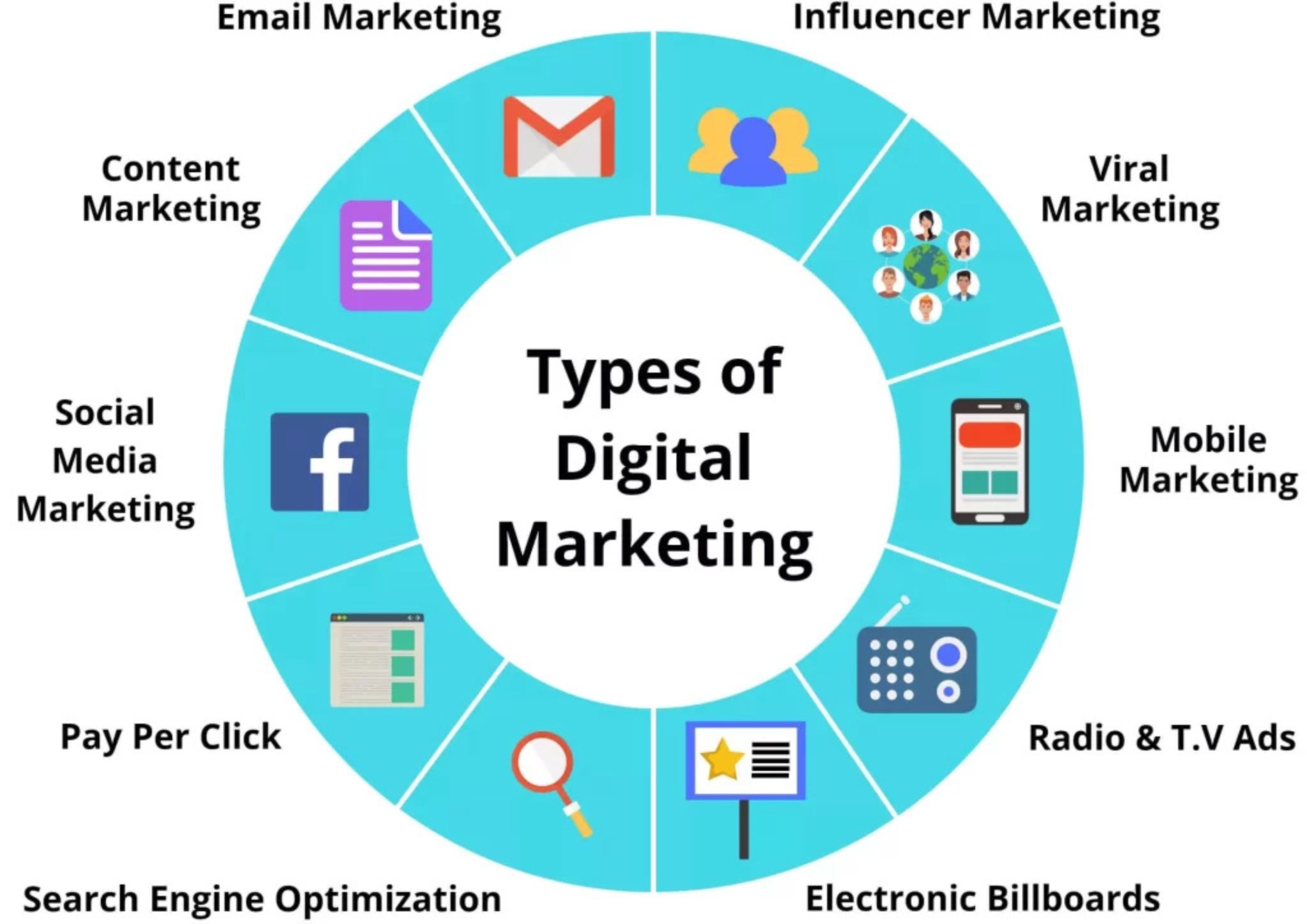
AFIC Technest Software & Digital Marketing Solutions
To empower businesses with innovative technology and effective digital marketing strategies that deliver real growth.